On Wednesday night the Irish Farmers Journal travelled to Carrigallen Mart for a farmer’s information meeting hosted by the mart. The main topics discussed on the night were farm safety and animal vaccination.
First up on the night was a live demonstration from Teemore Engineering showcasing a calving gate and calf crate. Local vets John Quinn and Finbarr Kiernan assisted in the demonstration offering their advice on the major pitfalls they have seen on farm.
They stressed the importance on calving gates hung at the correct height and installing a gate that allows for caesareans to safely take place and can restrict the cow to offer assistance in suckling a newborn calf. Correct planning of facilities is important taking care to allow for slipways or escape routes.
Animal vaccination
Following on from the safety demonstration John Quinn discussed vaccination in cattle. Correct handling of vaccines can’t be encouraged enough – farmers need to make sure vaccines are stored correctly in a reliable fridge and transported in a chill bag.
Once opened vaccines must be used in the correct time period, Most vaccines are to be used within eight hours of opening. Where farmers are using multiple vaccines, each vaccine should be checked to see its period of use once opened.
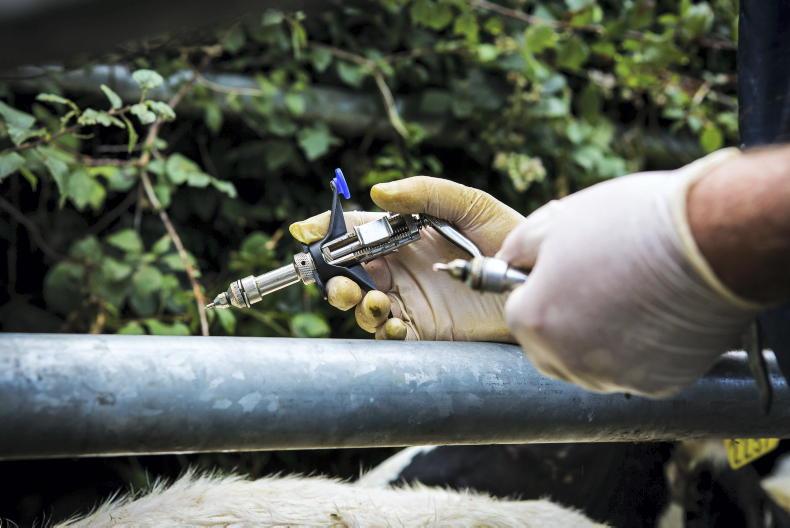
Following on from correct storage – John added that administration can often also be overlooked. It is important to minimise contamination of vaccines – the use of an automatic injection gun and changing the needle every five to 10 animals were the two major points of advice.
Journal of administration
Finbarr Kiernan encouraged farmers to keep a journal of vaccine administration dates to make sure boosters administered in the correct time period. Finbarr gave a live demonstration on the correct methods to dose sheep and the best spots to administer vaccines whether it’s intra-muscular or under the skin.
Using the correct gauge needle and dosing gun is very important – the calibration of dosing guns is often overlooked. Bluetongue virus was discussed with both vets pointing out that neither of them has seen or experienced the disease. They advise vaccination should be considered as full knowledge of the disease and the vaccines is as yet unknown.
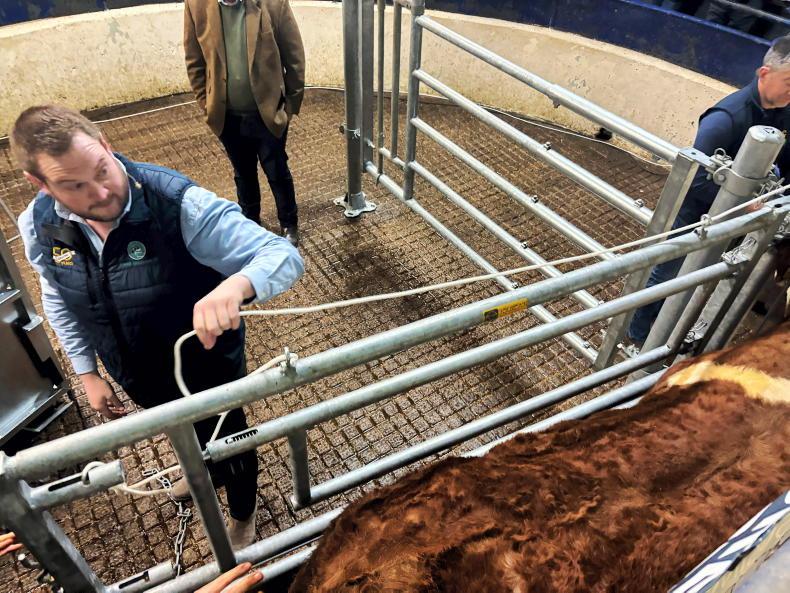
Teemore Engineering handling gates being showcased in Carrigallen.
Live exports
Derek Maxwell, local exporter, took to the mic after John and Finbarr and reinforced the message of the benefits of vaccination and dosing of weanlings. Derek informed farmers on what type of cattle he is seeking for each market, How North African countries are now outpricing the likes of Italy for E grade cattle, Italy are seeking red limousin bulls with Spain the destination for plainer type stock.
He talked about animal health and some of the quarantine restrictions depending on what country is the destination for cattle. He said the health of Irish weanlings is their selling point and their ability to thrive once they land in their destination. He added if farmers want these markets to remain open the health of weanlings has to be kept up with an increase in vaccination needed.
Available grants
Local agricultural consultant Tom Canning went through some of the safety grants available to farmers under TAMS III such as the calving gate and calf crate displayed during the live demonstration.
Tom encouraged all farmers to enquire with advisors about farm safety grant aid available at a rate of 60%. Tom explained the application process to farmers that these grants can take time to apply for and get approval. He noted that investments need to be completed to specification with geotagged photos required to be submitted at payment claim stage.
Smart collars
Sean Crowley from Censortec smart collars travelled all the way from Kerry to discuss the potential of smart collar monitoring systems and how they can be used to help improve herd fertility and animal health. Traditionally the most uptake was from dairy farmers but with the addition of animal monitoring systems to TAMS III and the advancements in solar systems, more uptakes has been seen in the suckler herds the last two years.
The limiting factor on suckler farms was the fact collars only hold information for 24 hours and animals must pass a monitoring base station to allow a farmer be able read the data on their phone/computer. The advancement in solar power systems allows for the fact most suckler farmers don’t enter the yard like diary cows do twice a day.
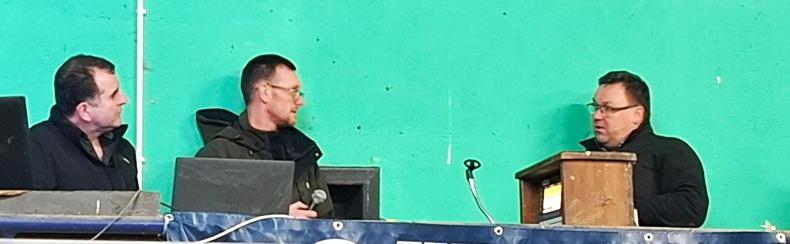
Emmon Gaffney (left) MC on the night with Derek Maxwell (middle) and Adam Woods (right). Derek and Adam discussing live exports and vaccination of weanlings in carrigallen Wednesday night.
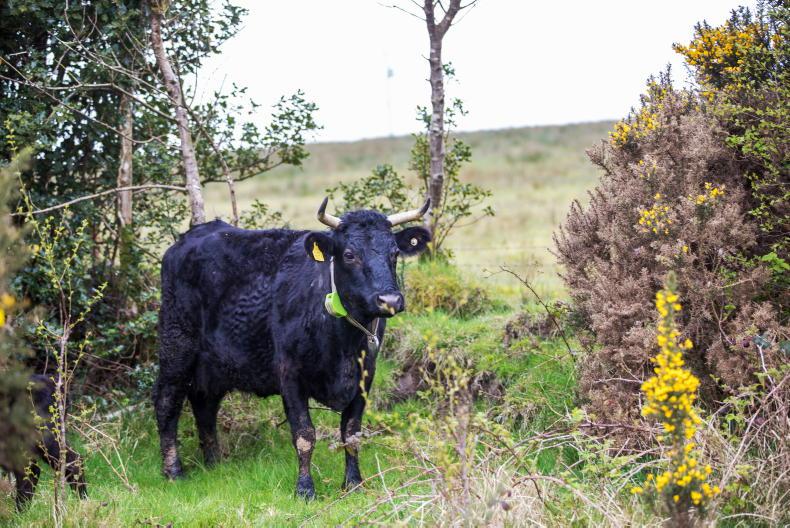
The collars allow farmers to see more information that may be missed on visual assessment – data such as when cows are ruminating, eating, resting, in heat and even the most optimum time for farmers to artificially inseminate cows if there were using certain sires or sexed semen.
Closing of the night was done by Adam Woods who discussed the beef outlook for 2026. While the outlook for 2026 remains good with no major increase in cattle supply forecast, he did remind farmers about the potential risks of bluetongue virus and the Mercosur trade deal.
The cattle kill in Ireland was down 200,000 head last year with the UK and EU beef kills also declining. Adam encouraged farmers to support their local marts as it’s in their own best interest to achieve the best price possible for stock.
On Wednesday night the Irish Farmers Journal travelled to Carrigallen Mart for a farmer’s information meeting hosted by the mart. The main topics discussed on the night were farm safety and animal vaccination.
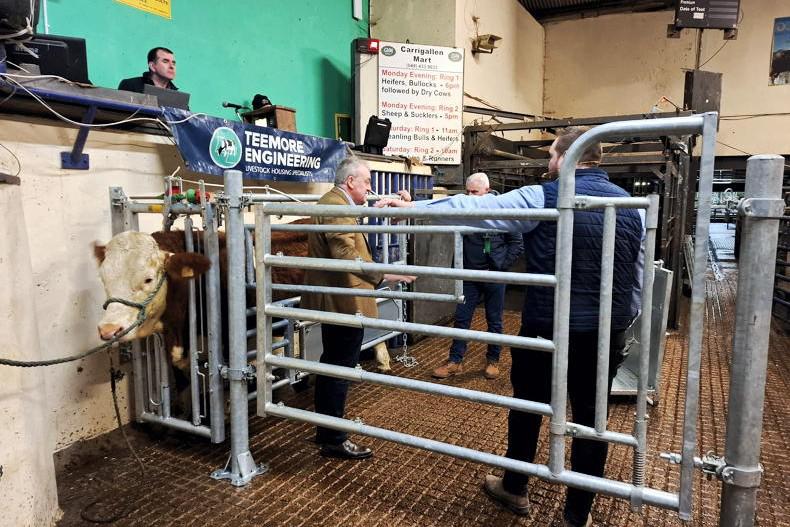
First up on the night was a live demonstration from Teemore Engineering showcasing a calving gate and calf crate. Local vets John Quinn and Finbarr Kiernan assisted in the demonstration offering their advice on the major pitfalls they have seen on farm.
They stressed the importance on calving gates hung at the correct height and installing a gate that allows for caesareans to safely take place and can restrict the cow to offer assistance in suckling a newborn calf. Correct planning of facilities is important taking care to allow for slipways or escape routes.
Animal vaccination
Following on from the safety demonstration John Quinn discussed vaccination in cattle. Correct handling of vaccines can’t be encouraged enough – farmers need to make sure vaccines are stored correctly in a reliable fridge and transported in a chill bag.
Once opened vaccines must be used in the correct time period, Most vaccines are to be used within eight hours of opening. Where farmers are using multiple vaccines, each vaccine should be checked to see its period of use once opened.
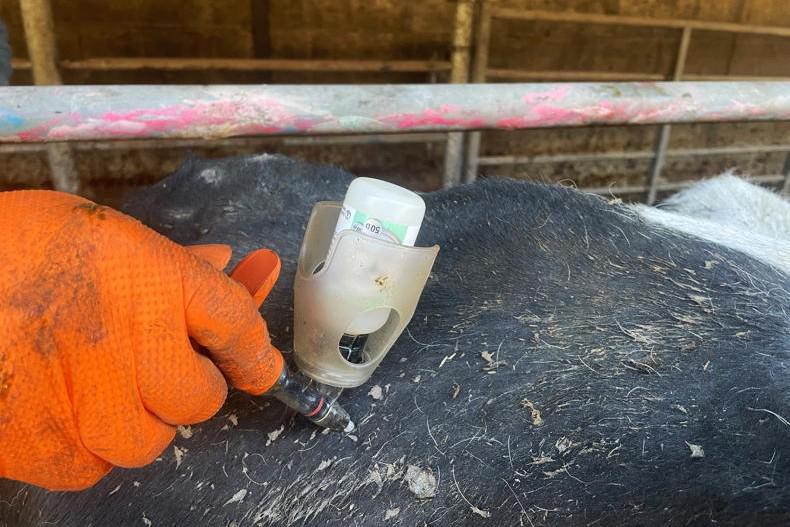
Following on from correct storage – John added that administration can often also be overlooked. It is important to minimise contamination of vaccines – the use of an automatic injection gun and changing the needle every five to 10 animals were the two major points of advice.
Journal of administration
Finbarr Kiernan encouraged farmers to keep a journal of vaccine administration dates to make sure boosters administered in the correct time period. Finbarr gave a live demonstration on the correct methods to dose sheep and the best spots to administer vaccines whether it’s intra-muscular or under the skin.
Using the correct gauge needle and dosing gun is very important – the calibration of dosing guns is often overlooked. Bluetongue virus was discussed with both vets pointing out that neither of them has seen or experienced the disease. They advise vaccination should be considered as full knowledge of the disease and the vaccines is as yet unknown.
Teemore Engineering handling gates being showcased in Carrigallen.
Live exports
Derek Maxwell, local exporter, took to the mic after John and Finbarr and reinforced the message of the benefits of vaccination and dosing of weanlings. Derek informed farmers on what type of cattle he is seeking for each market, How North African countries are now outpricing the likes of Italy for E grade cattle, Italy are seeking red limousin bulls with Spain the destination for plainer type stock.
He talked about animal health and some of the quarantine restrictions depending on what country is the destination for cattle. He said the health of Irish weanlings is their selling point and their ability to thrive once they land in their destination. He added if farmers want these markets to remain open the health of weanlings has to be kept up with an increase in vaccination needed.
Available grants
Local agricultural consultant Tom Canning went through some of the safety grants available to farmers under TAMS III such as the calving gate and calf crate displayed during the live demonstration.
Tom encouraged all farmers to enquire with advisors about farm safety grant aid available at a rate of 60%. Tom explained the application process to farmers that these grants can take time to apply for and get approval. He noted that investments need to be completed to specification with geotagged photos required to be submitted at payment claim stage.
Smart collars
Sean Crowley from Censortec smart collars travelled all the way from Kerry to discuss the potential of smart collar monitoring systems and how they can be used to help improve herd fertility and animal health. Traditionally the most uptake was from dairy farmers but with the addition of animal monitoring systems to TAMS III and the advancements in solar systems, more uptakes has been seen in the suckler herds the last two years.
The limiting factor on suckler farms was the fact collars only hold information for 24 hours and animals must pass a monitoring base station to allow a farmer be able read the data on their phone/computer. The advancement in solar power systems allows for the fact most suckler farmers don’t enter the yard like diary cows do twice a day.
Emmon Gaffney (left) MC on the night with Derek Maxwell (middle) and Adam Woods (right). Derek and Adam discussing live exports and vaccination of weanlings in carrigallen Wednesday night.
The collars allow farmers to see more information that may be missed on visual assessment – data such as when cows are ruminating, eating, resting, in heat and even the most optimum time for farmers to artificially inseminate cows if there were using certain sires or sexed semen.
Closing of the night was done by Adam Woods who discussed the beef outlook for 2026. While the outlook for 2026 remains good with no major increase in cattle supply forecast, he did remind farmers about the potential risks of bluetongue virus and the Mercosur trade deal.
The cattle kill in Ireland was down 200,000 head last year with the UK and EU beef kills also declining. Adam encouraged farmers to support their local marts as it’s in their own best interest to achieve the best price possible for stock.





SHARING OPTIONS